|
 Keynote Lectures
(tentative, under expansion!) Keynote Lectures
(tentative, under expansion!)
|
|

|
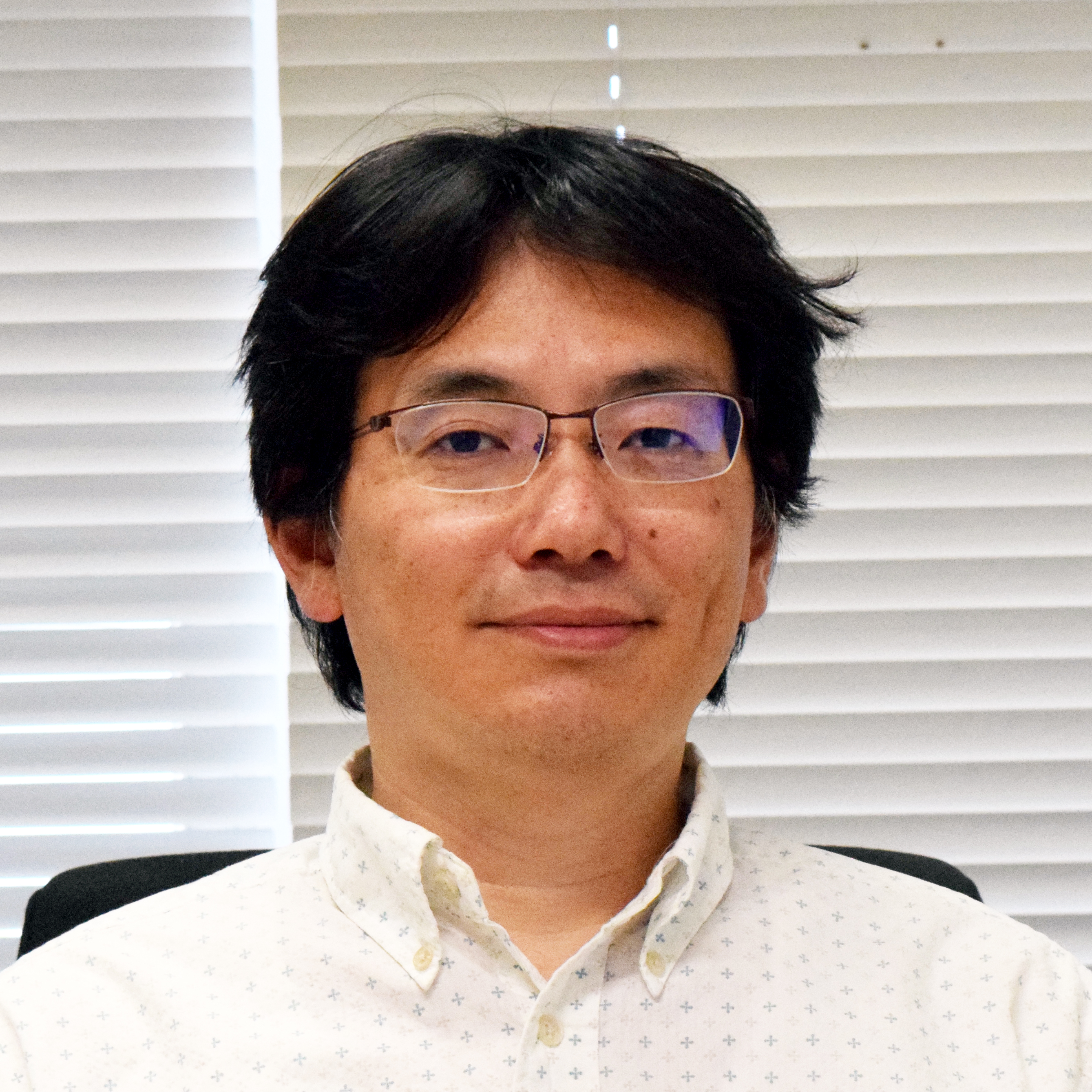
Takao
Yamaguchi, Ph.D
Professor, Gunma University (Japan)
|
[Title]
A Proposal of a Numerical Computation Method for Dynamic Responses of
Complicated Systems having Structures and Living Bodies with Reaction
[Abstract]
A fast finite element method is proposed to compute dynamic properties for
complicated systems having elastic/viscoelastic structures and living bodies
with reaction. We proposed an expressions of modal damping by applying
asymptotic expansion to complex eigenvalue problem of the dynamics systems.
We can analyze modal couplings in damping of the complicated dynamics
systems. This method is named as MSKE (Modal Strain and Kinetic Energy)
Method. This method is extended for the systems having nonlinear restoring
force with linear/nonlinear hysteresis. This proposed method can be applied
to calculate impact responses of soft structures. This method is extended to
complex nonlinear restoring force element to compute impact responses of
interaction systems between alive human bodies and machines (e. g. robots and
vehicles) using complex coefficients for the nonlinear restoring force. We
applied this method to obtain impact responses for alive human bodies under
contraction and relaxing condition of muscle, Negative values are given for
the imaginary parts of the nonlinear restoring force element to consider
effects of foresight, precaution and panic on the behaviors in the
calculation.
|
|
|
Yusaku
Fujii, Ph.D
Professor, Gunma University (Japan)
President, (NPO) The e-JIKEI
Network Promotion Institute (Japan)
|
[Title]
Will every streetlight have network cameras in the near future?
[Abstract]
A street camera network, in which many IP cameras are installed at a high
density, similar to street lights throughout a nation, will have a stronger
positive effect in suspect tracking and crime deterrence in the near future.
On the other hand, it will also have a stronger negative effect related to
the violation of privacy of ordinary citizens. In order to make such a
stronger surveillance camera system, which forcibly captures the images of
passersby for the public interest, be accepted as an essential social
infrastructure by a society, it is necessary for this camera system to make
ordinary citizens be convinced that it is used only for the public interest.
To realize this, a new concept, in which the abuse of a street camera network
is deterred by recording and disclosing browsing-history, is proposed. The
perspective on the street camera system in the near future is discussed.
[Reference]
Yusaku Fujii and Noriaki Yoshiura, "Will every streetlight have network cameras in the near
future?", SCIENCE, eLetters (21 October 2016) .
|
|

|
Seiji
Hashimoto, Ph.D
Professor, Gunma University
(Japan)
|
[Title]
Control and estimation techniques for electric power steering systems
[Abstract]
Electric power steering has a bright future as autonomous driving and active
safety systems for vehicles. Resent controlling and diagnosing electric power
steering systems requires an understanding of not only vehicle dynamics but
also state variables. In this talk, estimation and control methods for EPS
systems including the proposed methods based on advanced control theories
will be presented.
|
|
|

|
Dr.
Edwin Carcasona
Professor, San Carlos University (Philippine)
|
[Title]
Pyrolysis of Municipal Solid Wastes: Cebu’s Energy Solution for
Environmental Problems
[Abstract]
The Philippines is faced with environmental as well as energy crisis.
Included in the environmental crisis is the perennial problem of Municipal
Solid Waste (MSW) disposal. Pyrolysis is the transformation of a substance
into another compound by the application of heat alone. In the context of
energy, pyrolysis is the heating of organic materials in the absence of
oxygen with provisions for the recovery of the desired combustible products.
This paper will attempt to show that pyrolysis is one of the solutions for
both the energy and environmental problems. Pyrolysing Cebu’s almost 500
tons/day of MSW would produce approximately 11,250 kg/hr of pyrolysis gas.
This amount of gas would fuel a gas turbine system to generate almost 5.0 MW
of electricity.
|
|

|
Yusaku
Fujii, Ph.D
Professor, Gunma University (Japan)
President, (NPO) The e-JIKEI
Network Promotion Institute (Japan)
|
[Title]
Review of the Levitation Mass Method (LMM)
-
A Precision Method for Measuring Mechanical Quantities -
[Abstract]
The present status and the future prospects of the Levitation Mass Method
(LMM), which is a method for precision mass and force measurements, are
reviewed. The LMM has been proposed and improved by the author. In the LMM,
the inertial force of an inertial mass levitated using a aerostatic linear
bearing is used as the reference force applied to the objects under test,
such as force transducers, materials or structures. The inertial force of the
levitated mass is measured using an optical interferometer. Major
applications of the LMM, such as dynamic calibration for force transducers,
material testers without use of force transducers and the mass measurement
device (MMD) for use in the International Space Station (LMM), are reviewed.
|
|

|
Hadi
Nasbey
Lecture, State University of Jakarta (Indonesia)
|
[Title]
Review of the Levitation Mass Method (LMM) drop-ball test
[Abstract]
The present status and the future prospects of the Levitation Mass Method
(LMM) drop-ball test are reviewed. The LMM has been proposed and improved by
the author. In the test, a spherical, body containing a cube corner prism
which is arranged so that its optical center coincides with the center of
gravity is dropped from an initial height to the clay under test. The
velocity is measured using an optical interferometer as the function of the
Doppler shift frequency which is defined as the difference between the beat
frequency and the rest frequency. The position and acceleration of the
spherical body is calculated by differentiating and integrating the velocity,
respectively. Force acting on the spherical body is calculated as the product
of the mass and the acceleration of the spherical body. Major applications of
the LMM drop-ball test, such as Impact force measurement of a spherical body
dropping onto a water surface [1], Impact force measurement of a spherical
body dropping onto a polyurethane sheet [2], Impact force measurement of a
spherical body dropping onto sand particles [3], are reviewed.
|
|
|
|
|